
Probably Stolen Guide: First Week and Shop Basics
Start with Apprentice, check the Calendar before trading, and protect the next rent payment before buying production equipment. Inspect goods with the matching handbook and read each customer's Interests, Restrictions, and Budget. Expand when you can acquire inputs, run the full process, and sell its output without exhausting the shop's operating reserve.
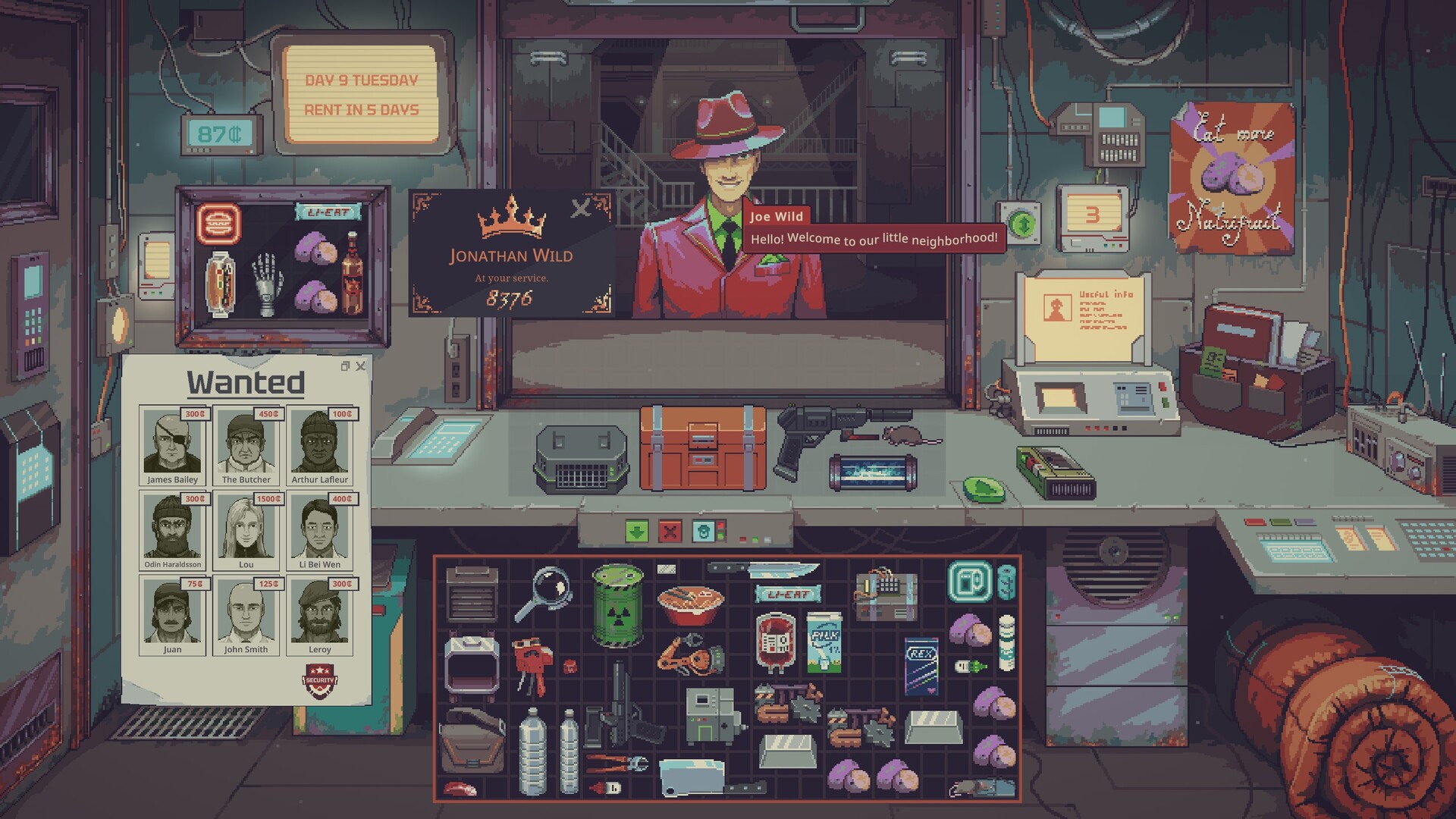
Quick start
- Choose Apprentice for your first save. It gives you a broad introduction without forcing you into a specialized production chain immediately.
- Use Price Gouge for the most forgiving economy or Mark Up for the standard experience.
- Check the Calendar before opening every day.
- Read each customer's Interests, Restrictions, and Budget before building a deal.
- Keep rent and essential service costs separate from expansion money.
- Inspect suspicious goods with the correct tool instead of treating every risk as the same system.
Choosing your first scenario and difficulty
Apprentice is the best general-purpose first scenario because it lets you learn customer trading, inventory, inspections, and the daily schedule before committing to a narrow production route. Water Merchant, Chemist, Gunsmith, Fence, and Rat Wrangler are better once you already understand their machines or obligations.
The four difficulty settings change the pressure on your shop. Price Gouge is the relaxed option, while Mark Up is the intended standard balance. There is no single correct setting, but a first run is easier to learn when a mistake does not immediately consume the rent fund.
Starting Perks are unavailable on the first completely new game. They appear on later starts, so a missing Perks screen is not a bug.
The daily shop loop
Use the same order every day until it becomes automatic:
- Read the Calendar. Note rent deadlines, story visits, services, and any property-value information.
- Prepare the shop. Charge tools, clear space, place the displays or certificates you want active, and check machine inputs.
- Open the shutters. Handle customers one at a time rather than accepting every offer quickly.
- Read the customer panel. Interests tell you what they want; Restrictions can make an otherwise good product unacceptable; Budget limits the total deal.
- Inspect when necessary. Use the relevant guide and tool before buying questionable stock.
- Close the shop deliberately. Confirm that rent money is still reserved before ordering supplies or machines.
- Set overnight work. Load powered machines, containers, services, or other tasks that resolve during the night.
- Choose the night activity and sleep. Night decisions can affect the following business day, so do not treat them as free actions.
How to inspect goods without mixing up the systems
Probably Stolen has several separate kinds of risk:
- A counterfeit check asks whether an item is fake or defective.
- An appraisal asks you to estimate an item's value for a service customer.
- Stolen heat concerns stolen goods and Security risk.
- Contraband concerns legality and permits.
- Wanted customers are checked against Wanted posters, not an item guide.
Use the Magnifying Glass or another required inspection tool, then compare every visible detail with the relevant in-game handbook. Only confront a customer when the evidence supports it. Guessing can turn a manageable transaction into a loss.
Surviving the first rent payment
Treat rent as money you do not own. The Calendar shows the deadline, and rent continues to rise as the run progresses. Before buying a machine, ask three questions:
- Do I already have a reliable source for its inputs?
- Can I complete the full process with the tools and power I own?
- Do I have customers or an exchange that will take the output?
If any answer is no, the purchase is probably an unfinished production line rather than an investment. A smaller, complete loop is safer than several disconnected machines.
Choosing your first production line
There is no universal fastest-money route because scenarios, customers, events, and difficulty all change the economy. Pick one line whose entire chain you can explain: acquire the input, process it, store it, and sell or exchange the result.
Water is understandable but requires testing and purification. Furnace production can turn junk into useful materials but needs power and correct recipes. Chemistry can be profitable, yet content loss and Cartel quotas punish careless batches. Rats require ongoing food, cleanliness, and breeding management. Start with the system your scenario already supports instead of buying into several at once.
Common beginner mistakes
- Spending the rent reserve on a machine that cannot yet produce a saleable item.
- Ignoring a customer's Budget or Restrictions.
- Treating all suspicious items as counterfeit checks.
- Loading a machine without power before ending the day.
- Copying a Demo-era price or day-by-day route into version 1.0.
- Assuming one creator's challenge route is the only efficient way to play.
First-week milestones instead of a fixed calendar
Your first milestone is completing a day without losing track of the next payment. Read the Calendar, finish the trades you understand, and see what the night calculation changes. This is a learning goal rather than a promise that a particular customer or machine will appear on that date.
The second milestone is making a complete production loop work once. Identify the input supplier, the processing equipment, the operating cost, and the buyer before expanding. If you can explain all four, you can judge whether another batch supports the shop or merely ties up the rent reserve.
The third milestone is repeating that loop while handling inspections correctly. Water needs testing; metal production needs power and valid inputs; livestock needs food and maintenance. Choose the routine you can sustain alongside customer transactions rather than trying to master every specialist system in the opening week.
A practical check before buying stock
Read Interests first to see whether the customer wants the category you intend to offer. Then check Restrictions and Budget before assembling the trade. A valuable item is still a poor fit when it violates a restriction or cannot fit within the customer's available spending.
When you are buying instead, separate resale potential from the inspection question. A tempting offer does not establish authenticity, legal status, or a reliable buyer. Use the appropriate handbook and tools before deciding whether the margin is worth the cost.
Version limits and unresolved details
This guide follows the supplied research for version 1.0.0.6 and the full-release shop loop. The developer recommended a fresh full-release save for Demo players; a pre-release challenge video is not a current price list. Balance mods can also change the economy behind these recommendations.
待确认 (Pending confirmation): the complete difficulty-specific starting rent and rent-growth table, current default shortcut keys, and the detailed Landlord's Grace values. This page therefore gives planning priorities rather than a guaranteed day-by-day budget.
FAQ
What is the best first start in Probably Stolen?
Apprentice is the strongest general recommendation for a first save because it introduces the core shop systems without locking you into a specialized chain.
What should I do on Day 1?
Read the Calendar and the documents left for you, learn how Interests and Budget shape a trade, preserve the rent fund, and complete one full day-and-night cycle before expanding.
How do I avoid buying fake items?
Inspect the item with the required tool and compare every visible feature with the current in-game handbook. Do not rely on the item's price or the customer's behavior alone.
Can I continue a Demo save?
The game can load old saves, but the developer recommends starting again for the full release so you do not miss new story content or carry old-version problems forward.